Naked Truths

Untitled © Michelle LaRiviere

Thinking, feeling, seeing
newness in oldness,
beauty in a soul laid bare,
freedom to embrace it all.

WHAT IS IT about old daguerreotypes, ambrotypes (collodion positives), and tintypes that still fascinates us nearly two hundred years after they were invented and replaced by more advanced technologies?

The daguerreotype was originally developed by early 19th century artists searching for a method to reproduce prints and drawings for lithography. The technique inadvertently contributed to the birth of photography, and we haven’t stopped taking pictures since – now more than ever before with the ubiquitousness of mobile technology.

But still, there is something arresting about antique portraits when we peer into the faces of people who are nothing more than strangers to us. The images have a certain depth and mystery that we rarely see in today’s fast-paced, social media, selfie-obsessed culture. So what’s the deal?

After much thinking on this, I finally realized a surprising truth that proves that technology shapes the content (and meaning) of creative expression. This happens because inherent physical and technological limitations have always determined the creative parameters and output of any technology. To use a modern example, the **selfie-stick expanded the previously limited photographic range of smartphones (from arm’s length selfies) to make it look like maybe somebody else took your picture and you’re not such a narcissist after all. Just kidding, but you get the picture.

Challenges in 1830s photography were different, but still had an effect on creative content. Long exposure times required the sitter(s) to keep very still while the plate was being exposed inside the camera. The process could take up to several minutes. Consequently, the body and facial expressions had to remain as still and relaxed as possible. Any movement, including blinking, would cause some amount of blurring in the photo. These types of poses were, out of necessity, the standard “look” of photographs at the time. But in analyzing this a little further, we observe a curious side-effect vis-a-vis content that completely transcends the physical or mechanical.

The effect that super-long exposure times had in portraiture was that it unwittingly dissolved the protective masks behind which humans conceal their inner lives. It peeled away the public persona we all unconsciously project to the outer world (think social media, where we carefully craft the best versions of ourselves). Like a microscope, it allowed the first cameras to peer inside the hearts and minds of husbands, wives, children, and others who had endured much – both good and bad. Nobody said “cheeeeese,” and without a practiced “camera face” camouflaging the features of these perpetually solemn people, we occasionally recognize in the photos a hint of something familiar – be it pride, bitterness, hardship, or whatever. We instantly know it by the set of the jaw, the tightness of the lips, or a twinkle in the eyes. There is nothing fake about the authenticity of these “leaked” emotions. In light of this knowledge, we should certainly be asking ourselves how modern technology is shaping content and meaning in our culture today, and how it may be affecting our values and habits.

I HAVE A CONFESSION to make. I’m not young anymore, and I’ve lived with depression for most of my life. When it comes on, it usually lasts for weeks and months at a time… and I don’t have a good poker face, if you know what I mean. On the positive side, I’ve learned to socialize more, rather than isolate like I used to, because it’s healthy and good for me (doctor’s orders.) My friends like to take a lot of photos when we’re together, which is usually fun. Anyway, (and this is the confession part) I’ve noticed in some photos a deep sadness etched across my face, especially in the eyes, and it’s almost too painful to look at. I thought this might be some unfortunate new development in my outward appearance, but oddly, it would appear that it was always the case (as you can tell by this professional portrait taken of me as a child the year of my father’s death). But then again, maybe it’s just that my adult mask has begun to dissolve as I transition slowly into a wise, but weathered crone. That might be it.

A Studio Photographer's Portrait of Me at Age Five

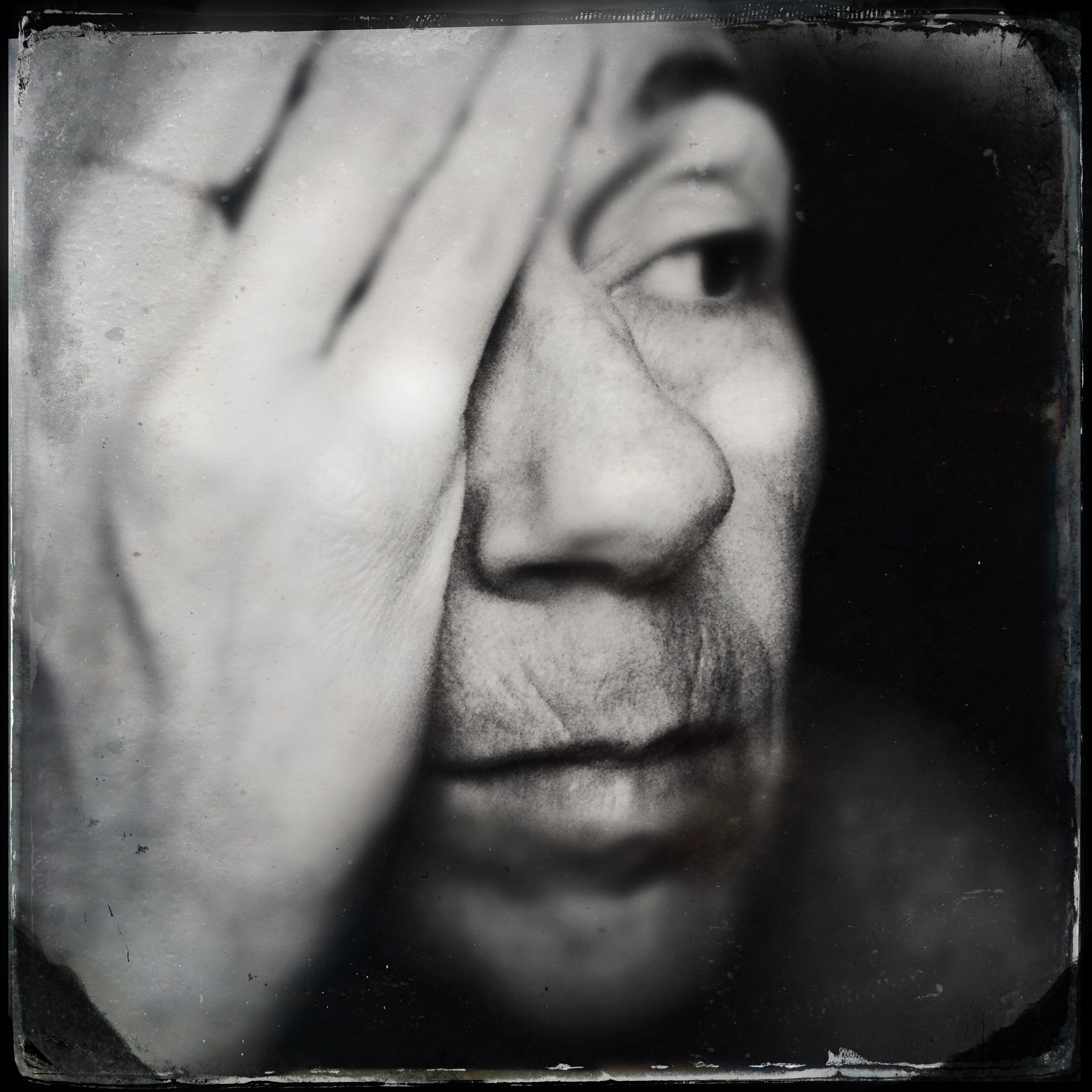
AS AN ARTIST, I’ve often used myself in my work because, well, I’m available 24/7, but mainly because my inner experience has always been the subject of my art – no matter the medium. Currently, I am using the Tintype Snappack from Hipstamatic to create pseudo-tintype photos, and creating double-exposure portraits as part of a new project. The combined effect of this medium + content is a good fit and creates exactly the right mood  – honest and vulnerable in its naked truth. Stay tuned for updates.

**DisclaimerI do not own a selfie-stick and only saw them for the first time while camping in Bruce Peninsula National Park about six weeks ago.

Periods: Collective Outrage

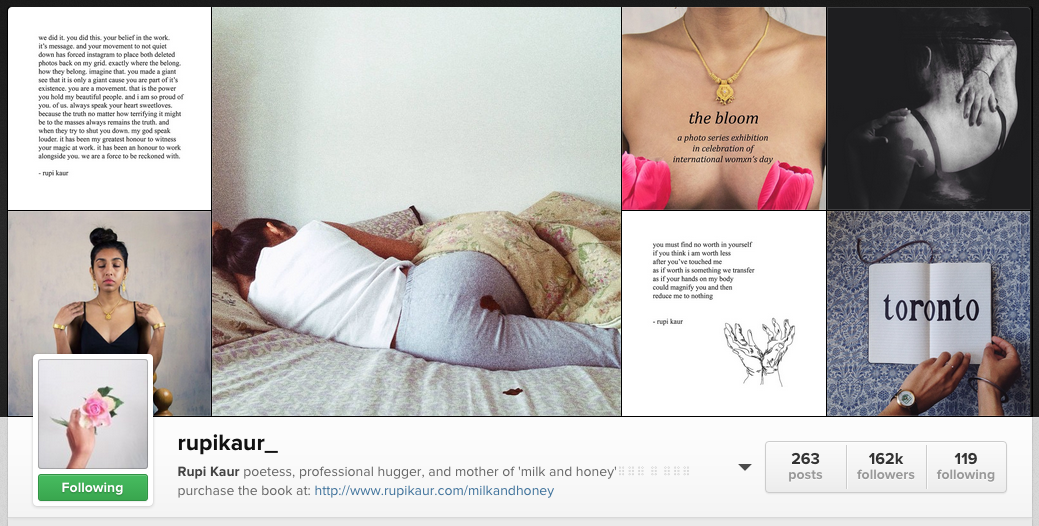
Rupi Kaur’s project about menstruation for a “visual rhetoric course” at the University of Waterloo has got people hopping – they’re hopping mad, hopping disgusted, hopping completely missing the point. We’re talking young and old, men and women, a range of backgrounds, you name it. Everybody’s got something to say.Screen Shot 2015-03-31 at 5.56.37 PM

In a nutshell, things began to heat up when PetaPixel published a story last week (as did the Washington Post) about how a photo on Kaur’s Instagram account was censored and taken down. It depicts a fully clothed woman with a blood stain on her pants. After reading the articles, I went to her website to learn more about the project. The verdict? I get it – no judgement here.

Social media did not exist when I was a student in the 90s, so our audience was extremely limited. Trust me, you do NOT want to know some of the projects my classmates came up with for our course assignments. But times have changed. Kaur is a published poet and a public figure with a large following on Instagram. She knows what she’s doing.

I should explain here that the purpose of this article is not to analyze Kaur’s project or the rationale behind it, but to examine the public’s reaction to the photograph. While Kaur stated that Instagram had proved her point, I can’t help but wonder how she is handling the public backlash. In the first days she wrote:

“Thank you @instagram, for providing me with the exact response my work was created to critique … when your pages are filled with countless photos/accounts where women (so many who are underage) are objectified. Pornified. And treated less than human. Thank you.”

Despite a not insignificant number of supporters rallying behind Kaur, the comment sections across the board are pretty grim:

“Gross. Art?!?!? Seriously. What the heck is wrong with society.” (… by a woman.)

“If this is “art” then brb, I have something to photograph in the toilet.” (… by a man.)

“G.R.O.S.S.
I don’t even want mine, why would I wanna see someone else’s.” (… by a woman.)

“Barforama. This is not art, it’s disgusting.” (… by a man.)

 “That’s just nasty. Whoever is calling it art is a pretentious weirdo. Periods are gross. And I don’t want to think about them or look at some chicks bloody snatch for gods sake! She needs to hit the shower, pronto! This is far from art…it’s unhygienic! And it kinda creeps me out that some people are digging it.” (… by a woman.)

“It’s only natural and she has a point on her response to instagram. She turns it into feminist propaganda and attacks men by way of blaming misogyny. Shame because she made a good argument until her dislike of men was brought into it.” (… by a man.)

Yep… that’s just a sampling. The first thing I observed was the common theme of using analogies for the monthly “period” (either to emphasize disgust, or to expand what could legitimately be called art in a facetious way) by comparing it to shit, semen, and even erections. Reactions were pretty extreme, but one thing was clear – few in this rabid army of commentators had actually bothered to read the articles or learn more about the project, and if they had, they still insisted on blindly reacting to one photograph randomly singled out and taken out of its original context.

If anything, the voracity of this collective outrage underscores the huge dichotomy between efforts to promote positive body image in young women, and societal pressures to perpetuate self-loathing and shame.

Without question, the outrage is hugely disproportionate to the situation, especially given the daily dosage of rape, murder, and gore heaped upon us in graphic detail through television and other media on a daily basis. To frame it another way, everyone is freaking out about a couple of blood stains without even stopping for a moment to wonder why we don’t react in the same manner when a hockey player ends up with blood on his jersey or on the ice. After all, blood is blood, right?

Other notable consequences which have arisen from a controversial photo [topic] taken out of context, are 1) that the whole concept of “what is art” has come under attack, and 2) discussions about taboos rooted in patriarchal systems are erroneously perceived as critiques against men, thus branding feminists as man-haters. Nothing could be further from the truth. It is precisely this type of dangerous thinking that got fourteen women murdered at École Polytechnique de Montréal (1989).

So… regarding the Rupi Gaur story, everyone needs to take a couple of steps back. First of all, one would assume a “visual rhetoric” course to mean a course where critical discussion on chosen topics is encouraged in a classroom setting via images rather than words or essays. As such, the Instagram photo in question is part of a larger body of work intended for Kaur’s class project (which we know addresses taboos surrounding the female body). The work is not inconsistent with everything else she posts on social media. In fact, it wasn’t even an issue until Instagram engaged in censorship and removed the photo while simultaneously allowing PORN to flourish all over it’s site. Yes, porn!! And that was the crux of the problem right there.

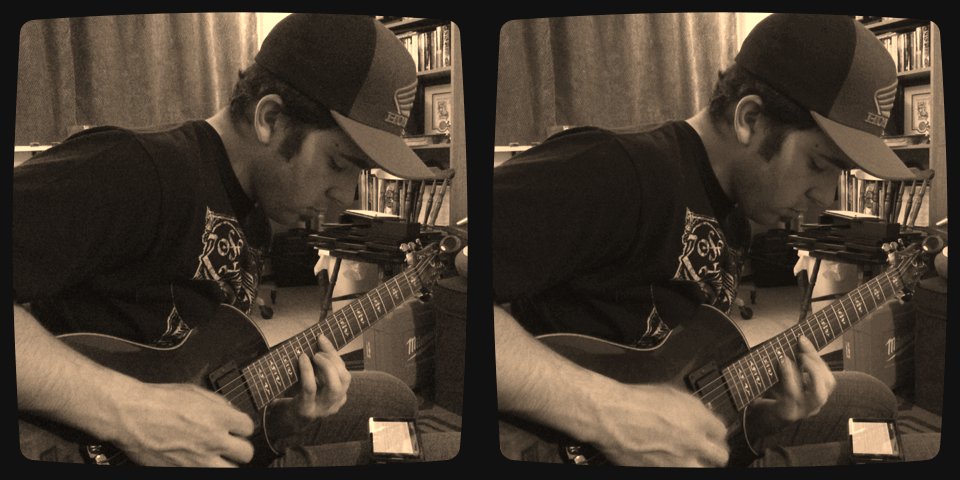
In order to verify whether this was true, I decided to search Instagram for explicit content. Well, surprise! I had no trouble finding plenty of tits and ass, to put it crudely, including come-fuck-me crotch closeups and yes, even hard-ons. I apologize for the language, but it’s the only way to describe the tone of what I saw – lewd and pretty much X-Rated. It is perplexing how some things get a free pass, and other things don’t. By the way, the example here is mild compared to some of what’s on Instagram, but you get the picture.Instagram Content

In conclusion, sometimes ART (in Kaur’s case, conceptual art in the form of a photographic essay) is simply about pointing out glaring inconsistencies in our society – for example that the overt sexualization and objectification of women and girls is somehow acceptable, but challenging the shaming taboos directed at women and girls is not. Hmmm… I’d sure like to know how Kaur’s work would have been received if each photo of a woman had been juxtaposed with the photo of a man with blood on his shirt or pants.

[Sigh]… if the comment sections in newspapers and social media are any indication, then it seems we’ve made very little progress as an evolved species. The North American education system has FAILED where arts, culture, critical thinking, and intelligent discourse are concerned. The K-12 curriculum is largely a mechanism designed for the corporate grooming of children with little regard for the value or role of arts literacy in sustaining a vibrant and thriving society.

University education, for those who seek it, is about learning to think outside the box, to push the boundaries, and to develop critical thinking skills through research, reflection, and discourse. The assignments and resulting projects are exercises through which young people learn and evolve, first as insightful human beings, and secondly as artists with much to offer the world, not just at a local level, but on a global scale. If we cannot discuss biology and negative cultural constructs in a calm and civilized manner, then what are we left with? I think we’ve already seen the answer.

The Cinemagraph

In just a few short weeks I’ve gone from fumbling with Keynote slideshows and movies to making interesting cinemagraphs with Photoshop and iPad apps. Fellow WordPress blogger, James Liswed, recently commented on one of my posts with a link to TEKNARI, and OMG my life has changed forever!! THANK YOU JAMES!!

Of course, my original mission was to learn how to create animated GIFs that are relevant to my current projects, especially Projet Sage NU. The goal is now firmly in sight.

See more of my animated GIFs on Tumblr … it’s where I’m showcasing my growing collection!