Still Standing

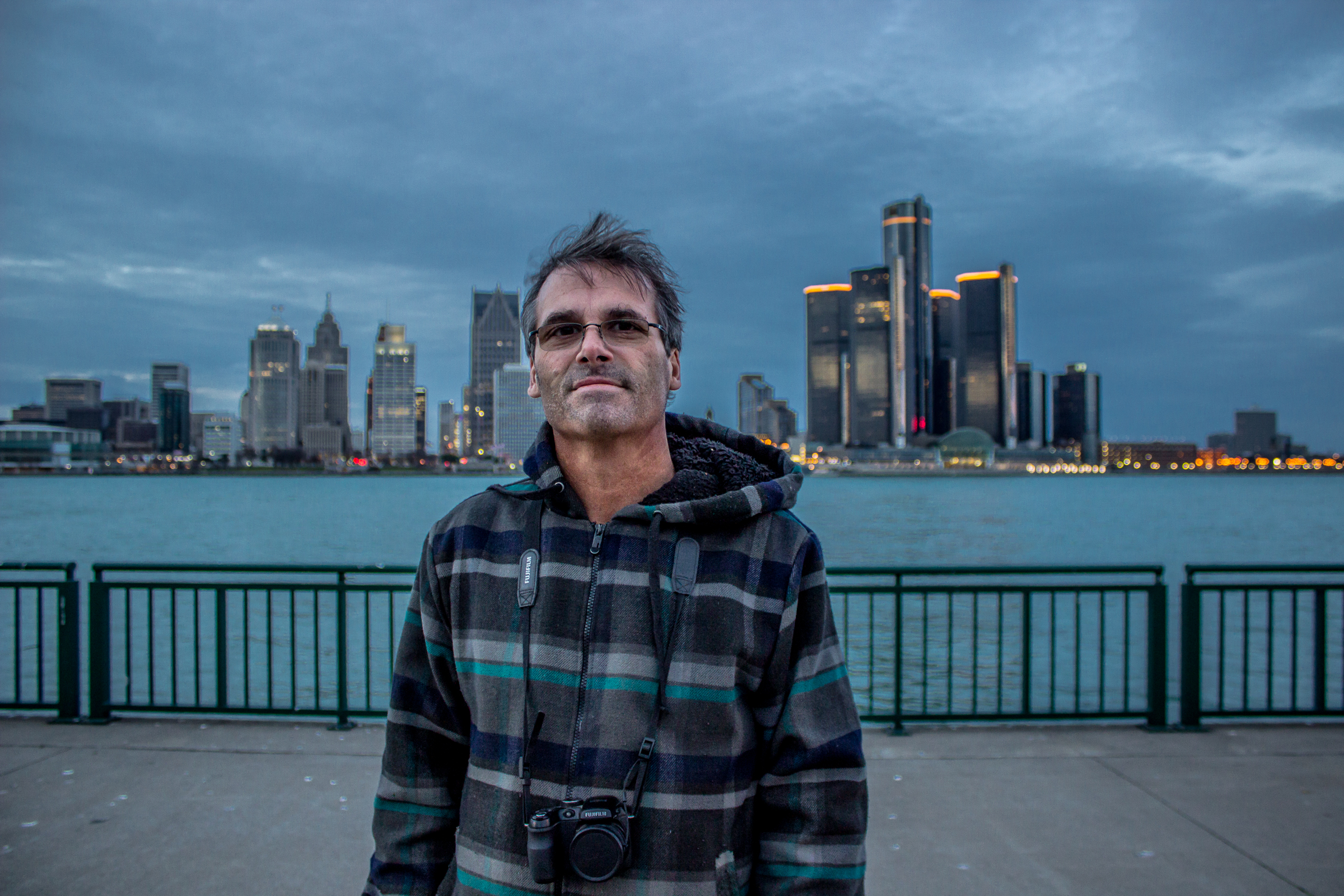
I love this photo of my brother in front of the Detroit City skyline.

Sometimes we get knocked down. For a while. We lay there, supine, gazing at the world with hazy longing while an invisible anvil pins us to the bottom of an indifferent river. An eternity ticks by in slowww-motion, tick, tick, while a hundred sunrises and a hundred sunsets quietly stain the sky. But today is a new day . . .

Forty years ago I fled the family nest, which had been uprooted in the early 60s from Detroit to a remote mining town in northern Ontario. It was always my intention to leave, but I visited often over the years, somehow believing that it’s the one who left who must always make the effort.

Guilt. It can play crazy tricks with the mind. But guilt for leaving a sad place that was never yours is absurd… especially in that moment when black ice sends your car careening through three feet of powder toward a frozen ravine while your baby screams in terror. The absurd has stubbornly lingered over time… but the gods were with us that day.

Thanksgiving. My brother traveled a thousand kilometres in late November for a long-awaited reunion with our family clan in Windsor and Detroit. Cancer and other setbacks had delayed his visit, but here he was at long last. My beautiful, brave, sensitive brother, ravaged by illness and radiation. A survivor. He stayed for five wonderful days – we talked, drank, laughed, and cried, but mostly we marvelled that we had made it this far. As a parting gift, I gave him our father’s helmet [1].

Melancholia. This thing that I naively thought I was leaving behind, in a small mining town so long ago, turned out to be a merciless stalker. Forty years, and thirty moves… apartments, houses, towns and cities. Lots of them, but still… the shadow persists. Just the other night I dreamt that I got the keys to a new apartment (right next door to my son and his family) – one with big windows, a parquet dance floor, and space to paint large canvases. I awoke with a lingering sense of joy that was gone before noon. And then this article from Brain Pickings crossed my path, What Depression Is Really Like. Van Gogh describes it well.

Reflection. I think for the first time in my life, I’m finally getting it. The moving thing. Endlessly running from the “black dog” with a carefully crafted rationale obscuring the truth. The truth. I cried for seven hours on this last U-Haul road trip in 2014, the flood-gates unleashed during a farewell hug after breakfast with my best friend, Kelly, in the parking lot at Burger World. Christ, I weep just thinking about it. Writing does that. It brings you to your core.

[1] While writing this post, it suddenly occurred to me that this is probably a preamble to the yet to be written Part 3 of The Diving Helmet. Follow the links to read the story from the beginning:
The Diving Helmet – Part 1
The Diving Helmet – Part 2

[Postscript] ** After publishing this post I realized the irony in the title, Still Standing. Detroit (the backdrop in the photo) is currently rising out of a long, dark period, and reinventing itself. I love that!!
Naked Truths

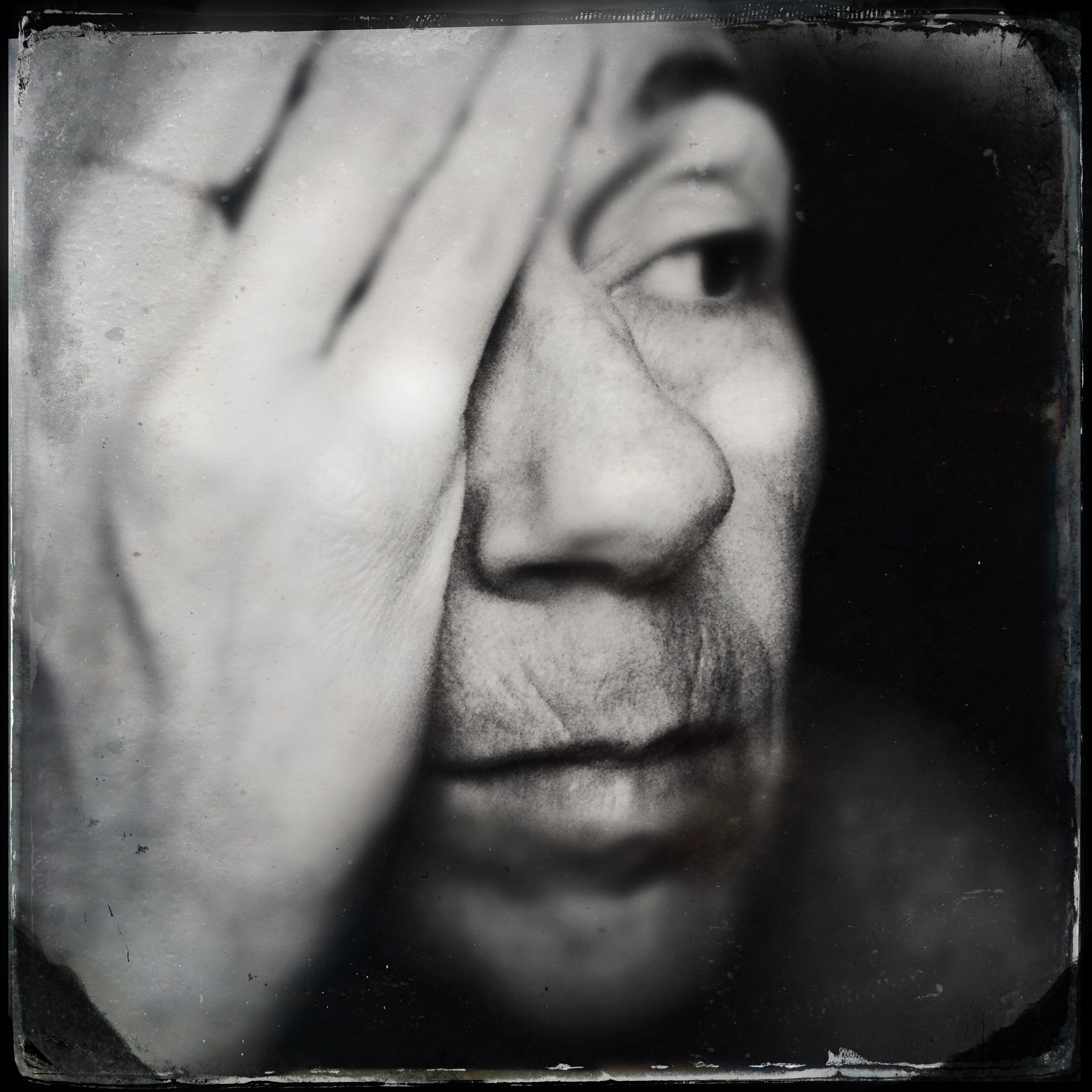
Untitled © Michelle LaRiviere

Thinking, feeling, seeing
newness in oldness,
beauty in a soul laid bare,
freedom to embrace it all.

WHAT IS IT about old daguerreotypes, ambrotypes (collodion positives), and tintypes that still fascinates us nearly two hundred years after they were invented and replaced by more advanced technologies?

The daguerreotype was originally developed by early 19th century artists searching for a method to reproduce prints and drawings for lithography. The technique inadvertently contributed to the birth of photography, and we haven’t stopped taking pictures since – now more than ever before with the ubiquitousness of mobile technology.

But still, there is something arresting about antique portraits when we peer into the faces of people who are nothing more than strangers to us. The images have a certain depth and mystery that we rarely see in today’s fast-paced, social media, selfie-obsessed culture. So what’s the deal?

After much thinking on this, I finally realized a surprising truth that proves that technology shapes the content (and meaning) of creative expression. This happens because inherent physical and technological limitations have always determined the creative parameters and output of any technology. To use a modern example, the **selfie-stick expanded the previously limited photographic range of smartphones (from arm’s length selfies) to make it look like maybe somebody else took your picture and you’re not such a narcissist after all. Just kidding, but you get the picture.

Challenges in 1830s photography were different, but still had an effect on creative content. Long exposure times required the sitter(s) to keep very still while the plate was being exposed inside the camera. The process could take up to several minutes. Consequently, the body and facial expressions had to remain as still and relaxed as possible. Any movement, including blinking, would cause some amount of blurring in the photo. These types of poses were, out of necessity, the standard “look” of photographs at the time. But in analyzing this a little further, we observe a curious side-effect vis-a-vis content that completely transcends the physical or mechanical.

The effect that super-long exposure times had in portraiture was that it unwittingly dissolved the protective masks behind which humans conceal their inner lives. It peeled away the public persona we all unconsciously project to the outer world (think social media, where we carefully craft the best versions of ourselves). Like a microscope, it allowed the first cameras to peer inside the hearts and minds of husbands, wives, children, and others who had endured much – both good and bad. Nobody said “cheeeeese,” and without a practiced “camera face” camouflaging the features of these perpetually solemn people, we occasionally recognize in the photos a hint of something familiar – be it pride, bitterness, hardship, or whatever. We instantly know it by the set of the jaw, the tightness of the lips, or a twinkle in the eyes. There is nothing fake about the authenticity of these “leaked” emotions. In light of this knowledge, we should certainly be asking ourselves how modern technology is shaping content and meaning in our culture today, and how it may be affecting our values and habits.

I HAVE A CONFESSION to make. I’m not young anymore, and I’ve lived with depression for most of my life. When it comes on, it usually lasts for weeks and months at a time… and I don’t have a good poker face, if you know what I mean. On the positive side, I’ve learned to socialize more, rather than isolate like I used to, because it’s healthy and good for me (doctor’s orders.) My friends like to take a lot of photos when we’re together, which is usually fun. Anyway, (and this is the confession part) I’ve noticed in some photos a deep sadness etched across my face, especially in the eyes, and it’s almost too painful to look at. I thought this might be some unfortunate new development in my outward appearance, but oddly, it would appear that it was always the case (as you can tell by this professional portrait taken of me as a child the year of my father’s death). But then again, maybe it’s just that my adult mask has begun to dissolve as I transition slowly into a wise, but weathered crone. That might be it.

A Studio Photographer's Portrait of Me at Age Five

AS AN ARTIST, I’ve often used myself in my work because, well, I’m available 24/7, but mainly because my inner experience has always been the subject of my art – no matter the medium. Currently, I am using the Tintype Snappack from Hipstamatic to create pseudo-tintype photos, and creating double-exposure portraits as part of a new project. The combined effect of this medium + content is a good fit and creates exactly the right mood  – honest and vulnerable in its naked truth. Stay tuned for updates.

**DisclaimerI do not own a selfie-stick and only saw them for the first time while camping in Bruce Peninsula National Park about six weeks ago.

The Cult of Cheap

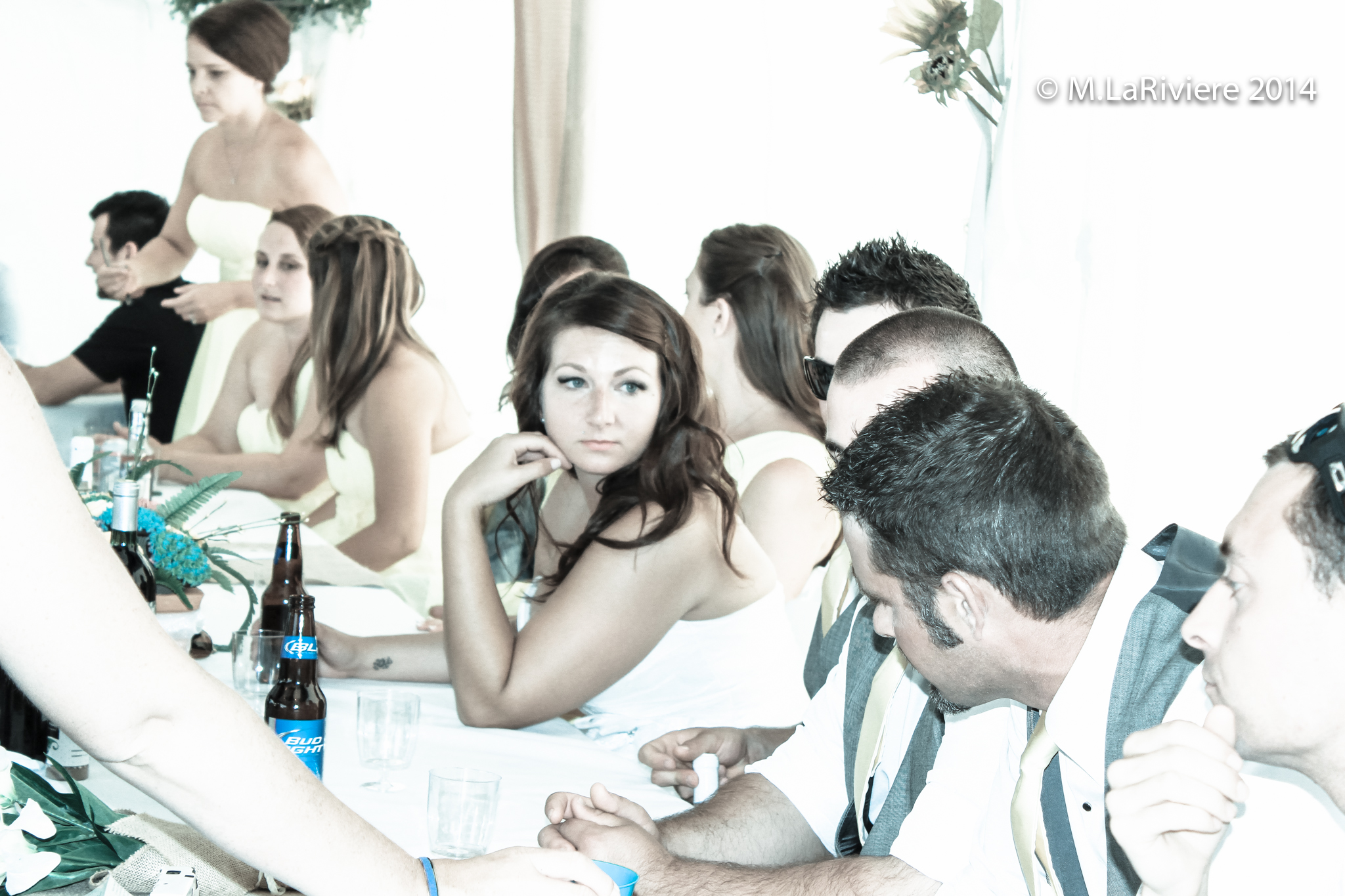
The Bride and Her PartyToday I read a great article on PetaPixel regarding the all too common prenuptial outcry about how outrageously expensive wedding photography is. Rather than justifying his fees to customers by providing an overall expenses list, wedding photographer Pavel Kounine prefers a different approach. He clarifies the difference between getting married and “holding a wedding,” and points out that the latter is actually a luxury… and an expensive one at that. Succinctly put, he writes:

The major expenses are everything that isn’t part of the official ceremony: the venue(s), liquor and multi-course meals for guests, a multi-tiered cake, flowers, decorations, entertainment, your wardrobe, makeup and hair, accommodations, and… your desire to have a wedding photographer document the entire affair and do so with exceptional artistry.

While Kounine’s argument holds merit, I think the problem goes much much deeper, especially where everything and anything creative is concerned. This perpetual baulking about price speaks to the disturbing devaluation of art and artists of all kinds in a world where outsourced knockoffs (Chanel handbag clones included) can be had for a buck at Walmart or elsewhere. Many people also believe that they are entitled to free music and movies (acquired illegally on the Internet), and besides… everybody with a smartphone can be a ‘photographer’ on Instagram [insert sarcasm here] so $3,000 for a professional wedding photographer?!!!?!! OMIGAWD!!!

The sad truth is that today’s values have been shaped by a financially driven, corporately designed, disposable mentality and lifestyle where consumers have been conditioned to endlessly consume cheap shit, thus keeping the 1% rich and laughing all the way to the bank. They have created a society that is addicted to dopamine inducing sales and deals, where the true and horrific costs of such are unscrupulously hidden from view. All of us, whether we want to admit it or not, have fallen victim to the cult of cheap.

Given our current situation, wedding photographers continue to struggle (as do creators in all media)… so when it comes to securing contracts, I suppose it is simply more prudent to point out the “luxury” rationalization to an emotional bride-to-be rather than argue with her the psychology of the corporate conspiracy to manipulate the masses and cheapen everything on the planet. In the end, we all pay one way or another.

Disclaimer: Although I captured the photo above at my niece’s wedding, I am not a wedding photographer. Kudos to her for hiring accredited photographer, David Fong, who did an amazing job capturing the magic of the day from beginning to end.